
How to Register a Patent in India – Step-by-Step Guide
1. Introduction
Innovation is the backbone of every successful business. Whether you are a startup founder, entrepreneur, researcher, or individual inventor, protecting your unique idea is extremely important. One of the best ways to safeguard your invention is through Patent Registration in India.
A patent gives you exclusive rights over your invention. This means no one can make, use, sell, or distribute your invention without your permission. In a fast-growing economy like India, protecting intellectual property has become crucial for startups and innovators.
However, many people are confused about how to file a patent in India, what documents are required, and how long the approval takes. The patent filing process in India may seem complex at first, but with the right understanding and guidance, it becomes much easier.
In this detailed guide, you will learn:
-
What a patent is
-
Why patent registration is important
-
Types of patents available in India
-
The step-by-step process of patent registration in India
-
Patent registration cost in India
-
Patent approval time in India
-
Common mistakes to avoid
Let’s begin by understanding the basics.
2. What is a Patent?
A patent is a legal right granted by the government to an inventor for a new invention. It allows the inventor to control how the invention is used commercially.
In India, patents are granted under the Patents Act, 1970, and managed by the Indian Patent Office.
Key Features of a Patent
-
Exclusive rights to the inventor
-
Protection for 20 years
-
Prevents others from copying or using the invention
-
Helps commercialize innovations
What Can Be Patented?
An invention must meet three important criteria:
1. Novelty
The invention must be completely new and not publicly disclosed anywhere in the world.
2. Inventive Step
It should not be obvious to experts in the field.
3. Industrial Applicability
The invention must be useful and capable of being used in industry.
Examples of Patentable Inventions
-
A new pharmaceutical drug formula
-
A unique AI algorithm
-
A new machine design
-
Innovative software technology
-
Manufacturing processes
Understanding these fundamentals is essential before starting the patent filing process in India.
3. Why Patent Registration is Important
Many startups and inventors delay patent registration because they believe it is expensive or complicated. However, registering a patent offers several powerful benefits.
1. Legal Protection
Patent registration gives legal ownership of the invention. If someone copies your invention, you can take legal action.
2. Competitive Advantage
Having a patent helps your business stand out in the market and creates a strong barrier against competitors.
3. Increased Business Value
Patents are valuable intellectual property assets. Investors and venture capitalists often prefer startups with patented technology.
4. Licensing Opportunities
You can license your patent to other companies and earn royalty income.
5. Brand Reputation
Companies with patents are often seen as innovative and technologically advanced.
For startups in India, Patent Registration in India can be a powerful tool for growth and market leadership.
4. Types of Patents in India
Before starting the patent filing process in India, it is important to understand the different types of patent applications.
1. Provisional Patent Application
A provisional patent in India is used when the invention is still under development.
Key Features
-
Provides temporary protection
-
Secures an early filing date
-
Valid for 12 months
-
Lower initial cost
This option is ideal for startups and researchers who are still improving their invention.
Example:
A startup developing a new battery technology can first file a provisional patent India application while completing the final product.
2. Complete Patent Application
A complete application contains detailed information about the invention.
It includes:
-
Full technical description
-
Claims defining the invention
-
Diagrams or drawings
This application is required to obtain the final patent.
3. Convention Patent Application
If an inventor has filed a patent in another country, they can file the same invention in India within 12 months using a convention application.
4. PCT (Patent Cooperation Treaty) Application
This allows inventors to seek patent protection in multiple countries using a single international application.
5. Step-by-Step Process of Patent Registration in India
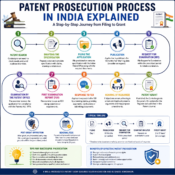
Understanding the step-by-step patent filing process in India helps avoid mistakes and delays.
Step 1: Patent Search
Before filing a patent, it is essential to check if the invention already exists.
This process is called a patentability search.
Why It Matters
-
Avoids rejection
-
Saves time and money
-
Identifies similar inventions
Patent searches can be conducted on databases such as:
-
Indian Patent Advanced Search System (InPASS)
-
Google Patents
-
WIPO databases
Step 2: Draft the Patent Application
Patent drafting is one of the most important parts of the process.
A patent application includes:
-
Title of invention
-
Abstract
-
Description
-
Claims
-
Drawings
The claims section defines the exact protection scope.
Poor drafting may result in weak protection or rejection.
Step 3: File the Patent Application
The next step in how to file a patent in India is submitting the application to the Indian Patent Office.
Applications can be filed:
-
Online through the IP India portal
-
Through a registered patent agent
-
Physically at patent offices
The filing date becomes the priority date of the invention.
Step 4: Publication of the Patent Application
The application is usually published after 18 months from the filing date.
However, applicants can request early publication for faster processing.
Once published, the invention becomes publicly visible.
Step 5: Request for Examination (RFE)
The patent office does not automatically examine applications.
The applicant must submit a Request for Examination (RFE) within 48 months from the filing date.
After the request is filed, the application moves to the examination stage.
Step 6: Examination by Patent Office
The patent examiner reviews the application and checks:
-
Novelty
-
Inventive step
-
Industrial applicability
-
Compliance with patent law
The examiner then issues a First Examination Report (FER).
Step 7: Respond to Objections
The applicant must respond to the objections mentioned in the FER.
This may involve:
-
Clarifying claims
-
Modifying the application
-
Providing technical explanations
Step 8: Grant of Patent
If the examiner is satisfied, the patent is granted.
The inventor receives a Patent Grant Certificate, giving exclusive rights for 20 years.
This completes the Patent Registration in India process.
6. Documents Required for Patent Filing
To start the patent filing process in India, several documents are required.
Essential Documents
-
Patent application form (Form 1)
-
Provisional or complete specification
-
Statement and undertaking (Form 3)
-
Declaration of inventorship (Form 5)
-
Power of attorney (if filed by patent agent)
-
Drawings or diagrams (if applicable)
Additional Documents
-
Proof of startup recognition (for fee benefits)
-
Priority documents (for international filings)
Proper documentation ensures faster processing of Patent Registration in India.
7. Patent Registration Cost in India
The patent registration cost in India depends on the type of applicant.
Government Fees
| Applicant Type | Filing Fee |
|---|---|
| Individual / Startup | ₹1,600 |
| Small Entity | ₹4,000 |
| Large Entity | ₹8,000 |
Other Costs
Additional costs may include:
-
Patent drafting fees
-
Patent search fees
-
Professional fees
-
Examination fees
Typical total costs:
-
Individuals / startups: ₹25,000 – ₹60,000
-
Companies: ₹60,000 – ₹1,50,000+
Hiring a patent professional increases the cost but significantly improves success chances.
8. How Long Does Patent Approval Take?
Many inventors wonder about the patent approval time in India.
The typical timeline is:
| Stage | Time |
|---|---|
| Filing | Day 1 |
| Publication | 18 months |
| Examination | 1–3 years |
| Final Grant | 3–5 years |
However, using expedited examination can reduce the process to 1–2 years for startups and certain applicants.
9. Common Mistakes to Avoid During Patent Filing
Many patent applications get rejected due to simple mistakes.
1. Not Conducting a Patent Search
Skipping the search may lead to filing an invention that already exists.
2. Poor Patent Drafting
Weak claims can limit protection.
3. Delaying Filing
Delays may cause loss of novelty if the invention becomes public.
4. Missing Deadlines
Important deadlines include:
-
Request for examination
-
Response to examination report
5. Incomplete Documentation
Missing forms or incorrect details can delay the patent filing process in India.
Avoiding these mistakes improves the chances of successful Patent Registration in India.
10. Benefits of Hiring a Patent Expert
Although individuals can file patents themselves, hiring a patent expert offers many advantages.
Professional Patent Drafting
Experts write strong claims that provide broader protection.
Faster Filing
Experienced agents understand the patent filing process in India and avoid errors.
Handling Objections
Patent experts can respond effectively to examination reports.
Strategic Protection
Professionals help decide:
-
Whether to file provisional patent India
-
When to file complete application
-
International patent strategies
For startups and inventors, working with a patent expert can significantly increase approval chances.
11. Frequently Asked Questions (FAQ)
1. Who can apply for Patent Registration in India?
Anyone can apply, including:
-
Individual inventors
-
Startups
-
Companies
-
Research institutions
2. What is the validity of a patent in India?
A patent is valid for 20 years from the filing date.
3. Can software be patented in India?
Software alone is not patentable. However, software with technical innovation or hardware integration may qualify.
4. What is a provisional patent in India?
A provisional patent India application protects an invention temporarily for 12 months while the complete patent is prepared.
5. Can I file a patent without a lawyer?
Yes, but professional assistance is recommended to avoid mistakes and improve approval chances.
12. Conclusion
Innovation drives progress, and protecting that innovation is essential for long-term success. Patent Registration in India gives inventors and businesses the legal right to control and profit from their inventions.
Although the patent filing process in India may seem complicated, understanding the steps makes it much easier. From conducting a patent search to filing applications and responding to examinations, every stage plays a critical role in securing your intellectual property.
Key takeaways:
-
Always conduct a patent search before filing
-
Consider filing a provisional patent India application for early protection
-
Prepare strong documentation
-
Monitor deadlines carefully
-
Seek expert assistance when needed
With proper planning, inventors and startups can successfully protect their innovations and build a strong competitive advantage.
Need Help with Patent Registration in India?
If you have a new invention or innovative idea, protecting it should be your top priority.
A professional patent expert can help you:
-
Conduct patent searches
-
Draft strong patent applications
-
Manage the patent filing process in India
-
Speed up approval
-
Protect your intellectual property globally
Contact a patent expert today and take the first step toward securing your innovation.

Recent Posts
Patent Prosecution Process in India

Can AI-Generated Inventions Be Patented in India?